
A great home theater is not only about having a large television. While picture quality plays an important role, sound can completely change the way you experience movies, television shows, sports, and music. A quality soundbar can transform an ordinary living room into a more engaging entertainment space without requiring a complicated collection of speakers and cables.
For homeowners looking for a balance between performance, simplicity, and modern design, a Sonos soundbar can be an excellent addition to a home entertainment system. The Sonos Beam, in particular, combines a compact design with features designed to improve dialogue, music playback, and cinematic sound.
Why Sound Matters in a Home Theater
Television speakers are often limited by the slim design of modern TVs. They may be sufficient for everyday viewing, but they usually cannot deliver the depth, separation, and room-filling sound that many viewers want from movies and music.
A dedicated soundbar addresses this limitation by placing multiple audio components in a single, streamlined enclosure. Instead of installing several large speakers around the room, homeowners can achieve a significant improvement in audio quality with one carefully positioned soundbar.
The Sonos Beam Gen 2, for example, supports Dolby Atmos and uses advanced processing to create a more immersive soundstage. Sonos also includes features such as Speech Enhancement and Night Sound to give users greater control over their listening experience.
Choose the Right Location for Your Soundbar
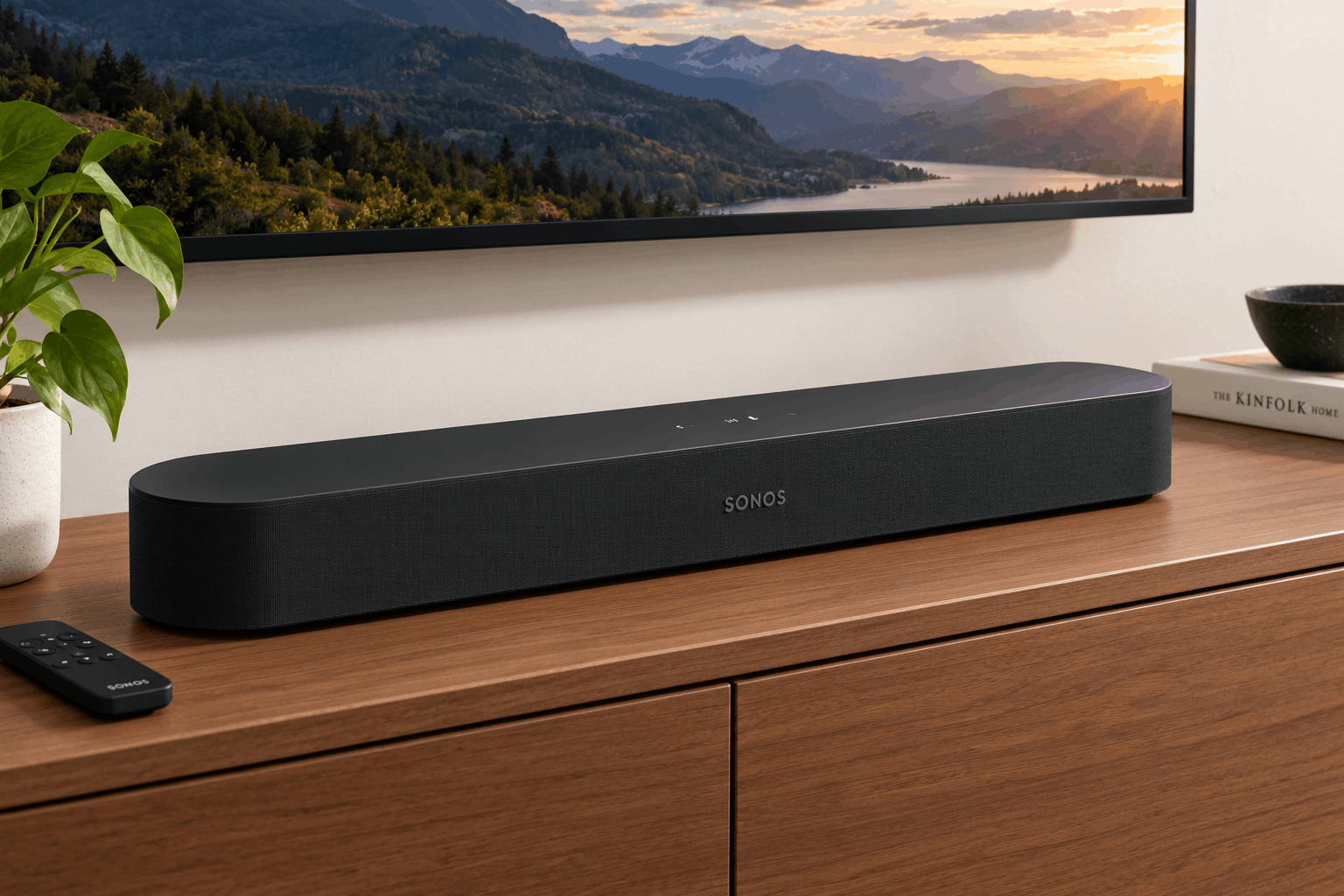
Soundbar placement can have a surprisingly large effect on performance. Ideally, the soundbar should sit directly below the television and face toward the main seating position.
If the TV is mounted on the wall, a compatible wall mount can help create a clean installation while keeping the soundbar properly aligned with the screen. If the television sits on a media console, make sure the soundbar is not blocked by decorative objects or other equipment.
The goal is simple: keep the soundbar unobstructed and positioned close to ear level whenever practical.
A compact model such as the Sonos Beam is particularly useful in smaller living rooms because its relatively narrow profile can fit comfortably beneath many televisions without dominating the room.
Take Advantage of Dolby Atmos
One of the major reasons consumers consider a modern soundbar is the ability to experience immersive audio formats such as Dolby Atmos.
Dolby Atmos can add a greater sense of height and dimensionality to compatible content. Instead of hearing everything as coming from a flat soundstage in front of the television, supported content can create a more spacious and enveloping presentation.
The Sonos Beam Gen 2 uses advanced processing to create virtual height effects for Dolby Atmos content. This can make action scenes, movie soundtracks, and atmospheric television programs feel considerably more engaging.
However, it is important to remember that the quality of the experience depends on the content, television, room layout, and overall setup.
Improve Dialogue With Speech Enhancement
One of the most frustrating problems with television audio is inconsistent dialogue. Music and sound effects may be loud and powerful, while conversations between characters can sometimes become difficult to understand.
This is where dialogue-focused audio features can make a difference.
Sonos provides a Speech Enhancement setting that boosts voice frequencies to make dialogue easier to follow. This can be particularly useful when watching movies with complex soundtracks or television programs where conversations are central to the story.
For families watching television at different times of the day, this type of feature can also reduce the temptation to constantly adjust the volume.
Tune the Sound to Your Room
Every room has different acoustic characteristics. Furniture, walls, flooring, curtains, and room dimensions can all affect the way sound travels.
Sonos addresses this with its Trueplay tuning technology. Trueplay analyzes the acoustics of the listening environment and adjusts the soundbar’s EQ to better suit the room. Compatible iOS devices are required for Trueplay tuning.
Room calibration is especially valuable when a soundbar is placed in an unusual environment, such as a room with an open floor plan or significant reflective surfaces.
Connect Through HDMI eARC or ARC
Connectivity is another important consideration when upgrading a home theater.
The Sonos Beam supports HDMI eARC/ARC, allowing compatible televisions to send audio directly to the soundbar. Sonos also provides an optical audio adapter for televisions that have an optical output rather than HDMI ARC.
Before purchasing a soundbar, check the available ports on your television. Understanding your TV’s audio capabilities can help ensure that you get the best possible experience from your new setup.
Build a Larger Sonos Home Theater
A major advantage of choosing a Sonos product is the ability to expand the system over time.
Instead of purchasing an entire surround sound system immediately, users can start with a soundbar and later add compatible Sonos products to create a more immersive setup. For example, a subwoofer can provide additional low-frequency impact, while compatible rear speakers can help create a wider surround experience.
This modular approach can make upgrading a home theater more manageable because homeowners can improve their system according to their space, budget, and entertainment needs.
Don’t Forget About Music
A soundbar does not have to be used exclusively for television.
The Sonos Beam is also designed for music playback and supports streaming through the Sonos ecosystem. Sonos states that Beam supports high-resolution formats including Dolby Atmos Music, allowing compatible music content to take advantage of a more spacious presentation.
This makes a quality soundbar useful throughout the day. It can provide cinematic audio during movie night and then become the primary music speaker for everyday listening.
Keep the Setup Simple
One of the biggest benefits of a modern wireless home audio system is simplicity.
Traditional home theater installations can involve multiple speakers, extensive cabling, receivers, and complicated configurations. A smart soundbar can significantly reduce that complexity.
With Wi-Fi connectivity, app-based control, TV remote integration, and optional expansion, a Sonos-based system can provide a convenient solution for people who want better sound without turning their living room into a technical project.
Final Thoughts
Creating an impressive home theater does not necessarily require a huge television room or a complicated speaker system. A thoughtfully selected Sonos soundbar can provide a strong foundation for better television audio, music listening, and immersive entertainment.
The Sonos Beam stands out for its compact form factor, Dolby Atmos support, HDMI eARC connectivity, dialogue-enhancement features, and Trueplay room tuning.
The key is to approach the setup as a complete system. Consider your room, television, seating position, connectivity options, and future expansion plans before making a decision. With the right placement and configuration, even a modest living room can become a much more enjoyable home entertainment space. Click here and purchase from the site: https://yoursonosbeam.net/

Leave a Reply