
A good home audio system should do more than make your television louder. It should make dialogue easier to understand, music more enjoyable, movies more immersive, and everyday listening more convenient. The challenge is finding a setup that delivers those benefits without filling your room with complicated equipment and unnecessary cables.
This is one reason wireless audio systems have become increasingly popular. Instead of building a traditional home theater around a receiver and numerous wired speakers, homeowners can start with a quality soundbar and gradually expand their system as their needs change.
Sonos has become a popular choice in this category, offering soundbars, wireless speakers, subwoofers, and portable audio products that can work together as part of a broader home sound system.
Start With the Room, Not the Equipment
Before buying a soundbar or speaker, consider the room where the system will be used.
A compact apartment living room has very different audio requirements from a large open-plan entertainment area. Room size, ceiling height, furniture placement, wall surfaces, and seating distance can all influence how sound is perceived.
For smaller spaces, a compact soundbar may provide all the audio performance you need. A larger room may benefit from adding a subwoofer or rear speakers later.
Thinking about the room first also prevents a common mistake: purchasing equipment that is much larger or more complicated than necessary.
Why a Soundbar Makes a Strong Starting Point
For many households, the television is the center of entertainment. Movies, streaming services, sports, gaming, and regular TV viewing all depend on clear audio.
A soundbar is a practical starting point because it occupies little space while providing a significant upgrade over most built-in television speakers.
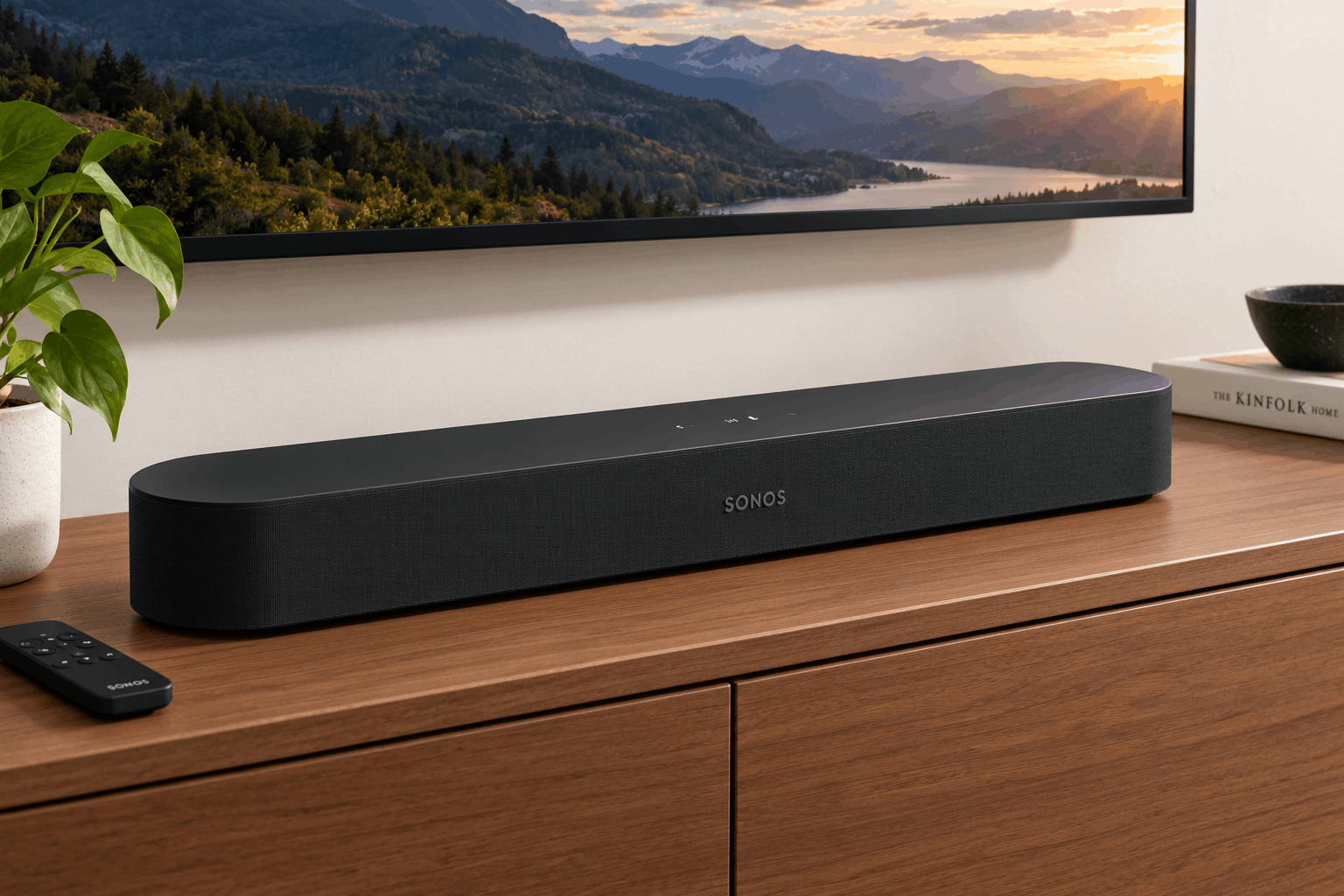
The Sonos Beam, for example, is designed as a compact smart TV soundbar and can also become part of a larger wireless home theater system. Meanwhile, larger models such as the Sonos Arc Ultra are aimed at listeners who want a more expansive cinematic experience. YourSonosBeam.net currently features both types of products alongside other Sonos speakers and accessories.
The important point is not simply choosing the most expensive model. It is choosing the soundbar that matches your room and listening habits.
Think About Dialogue Before Bass
Many people judge a sound system by how powerful the bass sounds. While bass is certainly important for movies and music, dialogue clarity can have a much bigger impact on everyday viewing.
A good home theater setup should allow you to follow conversations without constantly reaching for the remote control.
When comparing soundbars, look for features designed to improve speech clarity. This is particularly useful when watching dramas, documentaries, news programs, or movies with quieter dialogue and powerful sound effects.
Clear dialogue creates a more comfortable listening experience and can be just as valuable as additional volume.
Add a Subwoofer When You Need More Impact
Once you have a soundbar that handles voices and general audio well, the next logical upgrade may be a subwoofer.
A dedicated subwoofer is designed to reproduce lower frequencies, adding depth to movie soundtracks, music, and action sequences.
The Sonos Sub is one example of a wireless subwoofer designed to work with compatible Sonos systems. YourSonosBeam.net lists the Sub Gen 3 as part of its range of Sonos home audio products.
However, a subwoofer is not automatically necessary for every room. In a small apartment or bedroom, a soundbar alone may provide more than enough bass. In a larger living room, additional low-frequency performance can make the system feel much more immersive.
Consider Surround Sound Later
Another advantage of starting with a soundbar is that you do not need to build the complete system on day one.
You can begin with a soundbar and add compatible wireless speakers later. This gradual approach allows you to spread the cost over time while giving you the opportunity to understand what your room actually needs.
Rear speakers can add greater separation to movies and television programs, helping create a more convincing surround experience.
For people who enjoy watching action movies, sports, and cinematic content, adding rear speakers can be one of the most noticeable upgrades after purchasing a soundbar.
Multi-Room Audio Is About More Than Home Theater
A modern wireless audio system does not have to remain confined to the television room.
One of the most useful concepts in the Sonos ecosystem is multi-room listening. A speaker in the kitchen, another in the bedroom, and a soundbar in the living room can form part of a connected audio environment.
This makes the system useful throughout the day.
You might listen to music while preparing breakfast, continue listening in the living room, and then use the soundbar for a movie in the evening.
Instead of treating every speaker as a separate product, a multi-room system allows the home to function as one connected audio environment.
Wireless Does Not Mean Complicated
A major concern for first-time buyers is setup.
Traditional home theater systems can involve speaker wire, receivers, multiple inputs, and complicated configuration. Wireless audio reduces much of that complexity.
Modern systems can use Wi-Fi connectivity and smartphone apps to guide users through installation and system management. That means you can spend less time working out which cable belongs where and more time actually using the equipment.
Of course, compatibility still matters. Before purchasing a soundbar, check your television’s available connections and make sure the system supports the features you want.
Placement Can Change Everything
Even an excellent speaker can perform poorly if it is placed incorrectly.
A soundbar should generally be positioned directly below or close to the television, facing toward the listening area. Avoid blocking it with furniture or placing objects directly in front of the speaker.
Similarly, wireless speakers should be positioned with the room’s seating arrangement in mind rather than simply placed wherever there is an available surface.
Small changes in speaker placement can sometimes produce a more noticeable improvement than upgrading to a much more expensive piece of equipment.
Don’t Ignore Room Acoustics
Your speakers are only one part of the audio equation.
Hard floors, bare walls, large windows, and minimal furniture can create reflections that affect the way sound reaches your ears. Rugs, curtains, sofas, bookshelves, and other furnishings can naturally absorb or diffuse some of those reflections.
This does not mean you need to redesign your entire living room around audio. Instead, be aware that the same speaker can sound different in two completely different rooms.
Some modern audio systems also provide room-tuning technology to compensate for acoustic differences. Using those features can help you get more consistent performance from your equipment.
Build Around Your Actual Lifestyle
The best home audio system is not necessarily the one with the most speakers.
If you mainly watch television and occasionally listen to music, a high-quality soundbar may be enough.
If you regularly host movie nights, adding a subwoofer and surround speakers could make more sense.
If music is your priority, investing in wireless speakers throughout the home may provide greater value.
The goal should be to build a system around the way you actually use your home rather than copying someone else’s setup.
Final Thoughts
Creating a better home audio experience does not have to involve a complicated installation or an enormous equipment budget. A thoughtfully selected soundbar can provide the foundation, while additional speakers and a subwoofer can be added as your needs evolve.
Sonos products are particularly suited to this gradual approach because the range includes soundbars, subwoofers, home speakers, and portable models. YourSonosBeam.net’s current product selection reflects that broader ecosystem rather than focusing exclusively on one soundbar.
The smartest approach is simple: understand your room, identify your priorities, choose the right starting point, and upgrade only when an additional component will genuinely improve your listening experience.
A well-planned audio system should disappear into your lifestyle. When everything is set up correctly, you should not be thinking about the technology—you should simply be enjoying better sound. Click here and purchase from the site: https://yoursonosbeam.net/

Leave a Reply