

Modern televisions offer impressive picture quality, but their built-in speakers often cannot deliver the powerful and immersive audio that movies, sports, games, and music deserve. This is why many homeowners are upgrading to a soundbar for TV. A good soundbar can dramatically improve dialogue, bass, soundstage, and overall viewing without requiring a complicated traditional home theater setup.
With so many options available, however, finding the best soundbar can be challenging. From compact 2.0-channel models to advanced Dolby Atmos systems with wireless subwoofers and rear speakers, every soundbar is designed for a slightly different listening experience.
Here are the most important factors to consider before choosing a soundbar for your home.
1. Choose the Right Soundbar Size
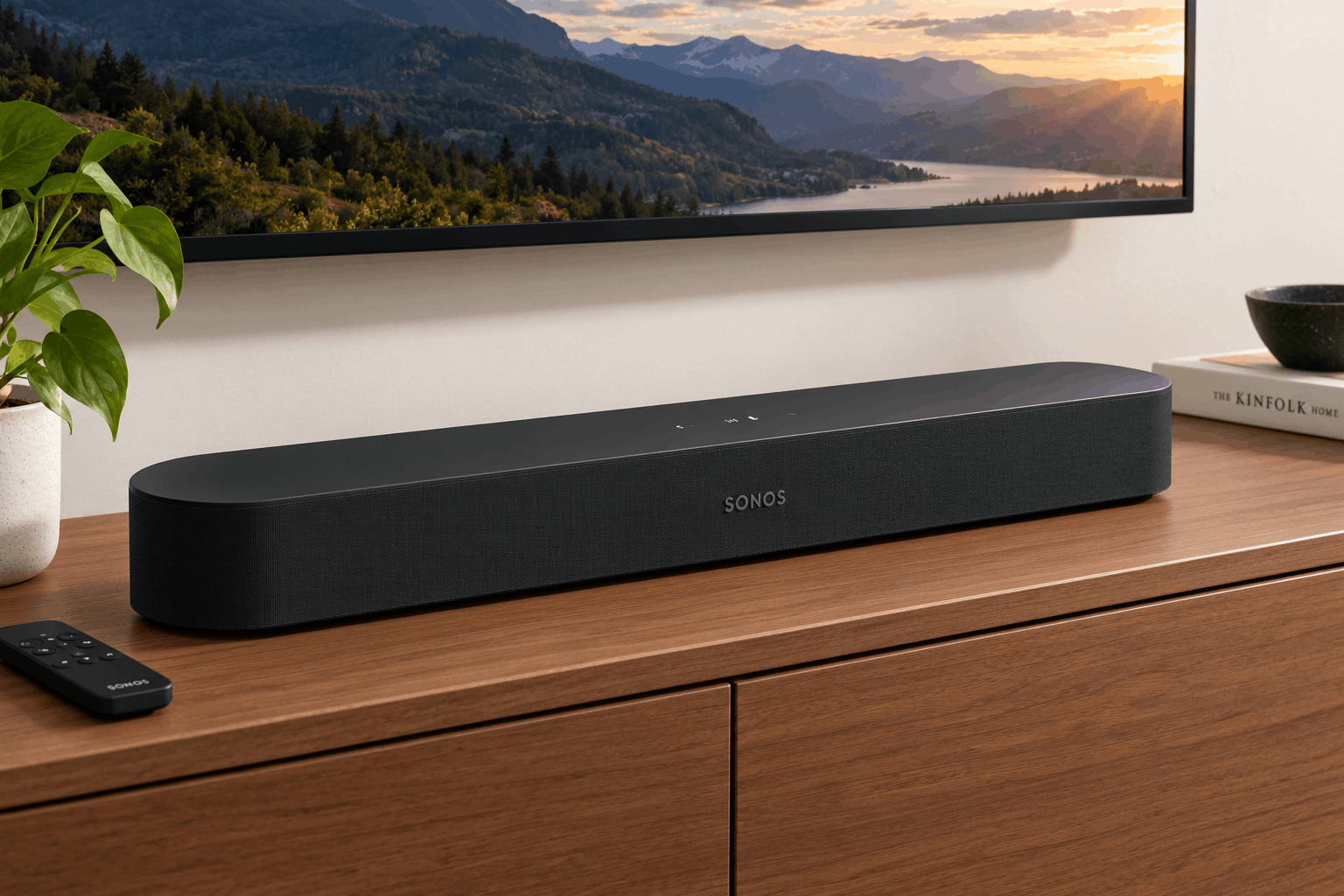
The size of your room and television should influence your soundbar choice. A compact soundbar may be ideal for a bedroom, apartment, or smaller television, while a larger living room may require a more powerful home theater soundbar.
Ideally, the soundbar should complement the width of your television rather than looking extremely small or oversized beneath the screen. More importantly, it should provide enough output to fill the room without distortion.
If you mainly watch television from a short distance, a compact model may be sufficient. For larger rooms and bigger screens, consider a soundbar with multiple channels and a dedicated subwoofer.
2. Understand Soundbar Channels
When searching for the best soundbar for TV, you will often see numbers such as 2.0, 2.1, 3.1, 5.1, or 5.1.2.
The first number generally represents the main audio channels, while the second number indicates whether a dedicated subwoofer is included. An additional third number in systems such as 5.1.2 usually represents height channels used for immersive audio formats.
A 2.0 soundbar provides a straightforward stereo upgrade over built-in TV speakers. A 2.1 system adds a subwoofer for stronger bass, while a 3.1 configuration typically adds a dedicated center channel for clearer dialogue.
For a more immersive home theater experience, 5.1 and Dolby Atmos systems can provide a wider and more three-dimensional soundstage.
3. Consider a Dolby Atmos Soundbar
A Dolby Atmos soundbar is an excellent option for people who want a more immersive movie-watching experience. Dolby Atmos is designed to create a three-dimensional audio environment, allowing compatible sound to appear as though it is coming from different directions, including above the listener.
Some soundbars achieve this using upward-firing speakers, while others rely heavily on digital processing to create a virtual height effect.
If you regularly watch movies and streaming content that supports Dolby Atmos, investing in an Atmos-compatible soundbar can be worthwhile. However, don’t choose a soundbar solely because it has the Atmos logo. Speaker configuration, room acoustics, placement, and overall audio quality also matter.
4. Don’t Underestimate a Soundbar With Subwoofer
One of the biggest advantages of upgrading your TV audio is improved bass. A soundbar with subwoofer can produce deeper and more powerful low frequencies than most compact soundbars with built-in speakers alone.
A dedicated subwoofer can make explosions feel more impactful, music sound fuller, and action scenes considerably more engaging.
Wireless subwoofers are particularly convenient because they can usually be positioned around the room without requiring a long audio cable connected to the soundbar.
If you mostly watch news and dialogue-heavy television programs, you may not need an extremely powerful subwoofer. But for movies, gaming, and music, it can make a noticeable difference.
5. Look for Clear Dialogue
Powerful bass and surround effects are impressive, but dialogue clarity remains one of the most important features of a good soundbar.
Some movies and television shows mix dialogue with background music and sound effects, making conversations difficult to understand through basic TV speakers. A soundbar with a dedicated center channel or dialogue-enhancement feature can help voices remain clear.
If you frequently watch documentaries, dramas, sports commentary, or news, prioritize a model that performs well with spoken voices.
The best soundbar for TV isn’t necessarily the one with the most bass. For many viewers, clear and balanced dialogue is much more valuable.
6. Check HDMI ARC and eARC Compatibility
Connectivity is another important consideration. HDMI ARC and eARC make it easier to connect a soundbar to a compatible television while allowing audio to travel from the TV to the soundbar through a single HDMI connection.
Before purchasing, check which ports are available on your television. Some soundbars also include optical audio, Bluetooth, USB, Wi-Fi, and other connection options.
Bluetooth is especially useful if you want to use your wireless soundbar to stream music from a smartphone or tablet.
Choosing a soundbar with the right connectivity can make installation much easier and reduce cable clutter around your entertainment center.
7. Think About Your Main Use
Different people need different types of soundbars. If your main goal is improving everyday television audio, a compact 2.0 or 2.1 model may be enough.
Movie enthusiasts may prefer a Dolby Atmos soundbar with a subwoofer. Gamers may benefit from surround sound, immersive audio processing, and dedicated gaming modes. Music listeners should pay close attention to stereo performance and wireless connectivity.
Before spending money, make a short list of the features you actually need. This prevents you from paying extra for features you may never use.
8. Consider Room Placement
Even the best soundbar can perform poorly if it is positioned incorrectly. Place the soundbar directly below the television when possible, with the front speakers unobstructed.
If your soundbar includes upward-firing Atmos speakers, avoid placing objects directly above them. The reflected sound needs a relatively clear path to create the intended height effect.
A subwoofer can generally be placed beside the television or elsewhere in the room. Experimenting with its position can help you find a location that produces smoother and more balanced bass.
Final Thoughts
Choosing the best soundbar for TV doesn’t have to be complicated. Start by considering your room size, television size, preferred content, and budget. Then look at important features such as soundbar channels, Dolby Atmos, dialogue enhancement, HDMI ARC/eARC, Bluetooth, and a dedicated subwoofer.
For casual television viewing, a compact soundbar can provide a significant improvement over built-in TV speakers. For movie lovers and home theater enthusiasts, a multi-channel soundbar with subwoofer or Dolby Atmos system can create a much more immersive experience.
The key is to choose a system that matches your actual needs instead of simply buying the most expensive model available. With the right combination of features, placement, and connectivity, a quality soundbar can turn an ordinary television into the centerpiece of a much better home entertainment experience. Click here to purchase https://yoursoundbarguru.com/

Leave a Reply